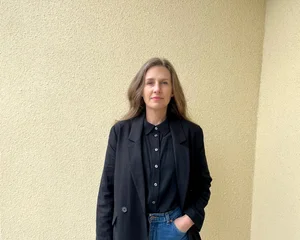
Jennifer Senior
I. “You Can’t Have a Comment Section on Your Therapy Session.”
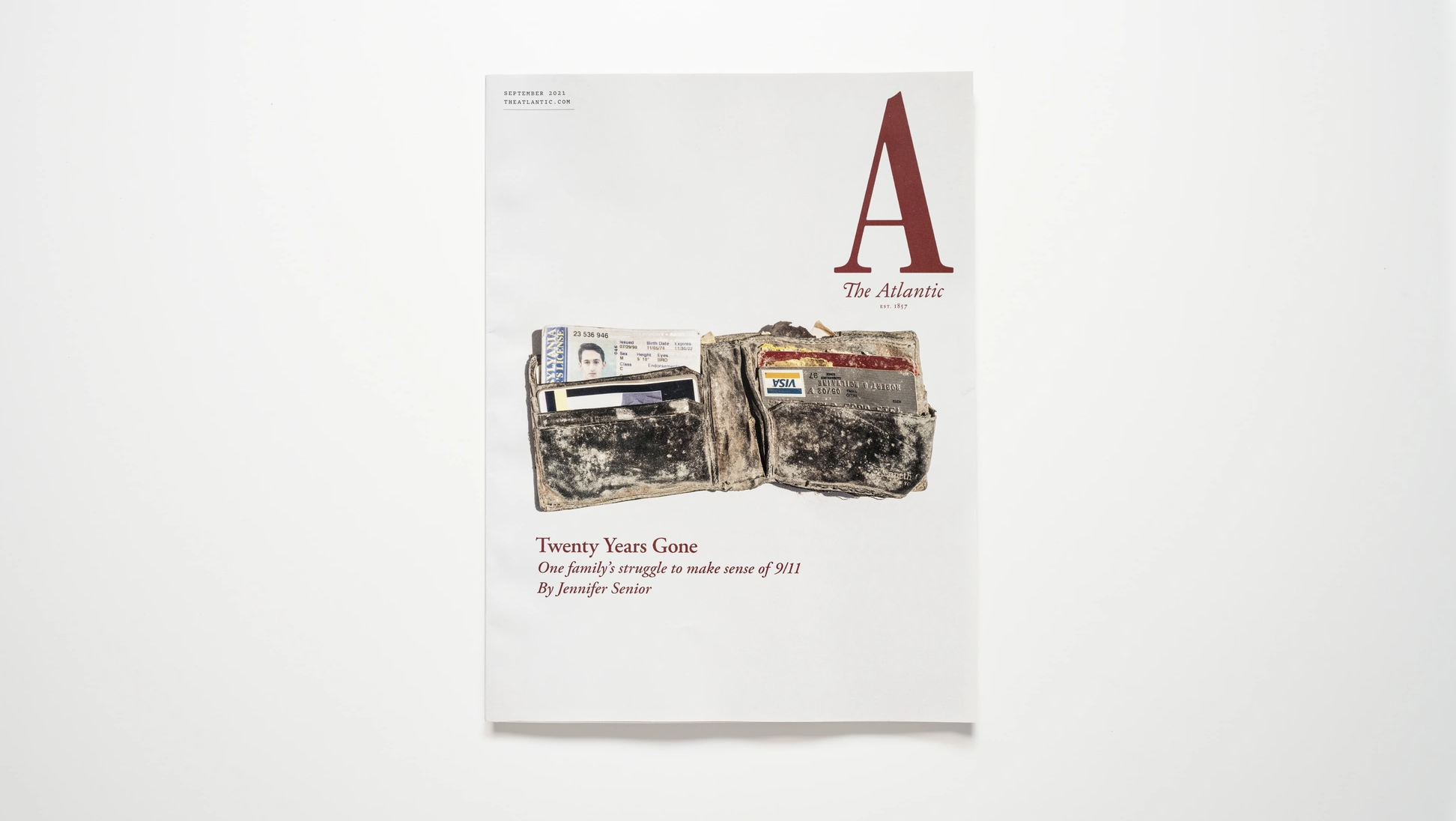
Senior’s 2021 Atlantic essay “What Bobby McIlvaine Left Behind” won the Pulitzer Prize for feature writing
Jennifer Senior’s tender, wise, carefully reported essays have helped millions of readers understand the human depths. For New York Magazine, she often took up the inner lives of public figures, including Hillary Clinton and Antonin Scalia, and studied phenomena from urban loneliness [“Alone Together”] to “happiness studies” [“Some Dark Thoughts on Happiness”] Her bestselling book All Joy and No Fun took a long hard look at the peculiar psychology of parenting. The result departed sharply from myth and dignified a generation of parents with the truth of their felt reality.
After writing daily book reviews and op-eds for TheNew York Times, Senior posted to The Atlantic, where her features include a winner of the Pulitzer Prize, a Pulitzer finalist, and two National Magazine Awards. These pieces tell aching stories about how big souls endure grief, disability, and friendship.
Senior’s work shows vividly how journalism can inform health and psychology and we had a great talk about what fascinates her and where social science wears horse blinders. Near the start, Senior touched on the distinction between journalism, as she practices it anyway, and psychotherapy.
Jennifer Senior: Therapy is this very intimate setting. Journalism generally tries to universalize—or at least tell stories to which many people will relate. Sharing something with an audience suggests you’re describing something that’s not simply felt by one person. Readers are unconsciously primed to say, “Oh, this is speaking to community.” Comments sections have really busted open this discussion, too. You can’t have a comment section on your therapy session.
Quite Broken: We’d like to see an art project where someone is in livecast therapy, and the comments are turned on. But yes—therapy is private, legally protected, sealed. Also, in medicine, the physician often has to put a person into a category of some kind, to reduce the complexity into a recognizable syndrome.
But journalism can do the opposite: get hyper-specific, yet with a particularity that resonates outward. In your piece on the McIlvaines, you’re not dealing with “grief divergence syndrome” or something like that. You’re dealing with this family: alive, vivid, complicated.
JS: A big complaint about doctors is that they're not very imaginative. When people read literature, they are free to be imaginative. Maybe the key word is “free,” not bound up or constrained. Also, in journalism if it’s any good the language is accessible. Doctors tend to come from a pretty narrow vocabulary, based on a narrow body of literature, which I think tends to work against idiosyncrasy.
Take my example of Long COVID. It’s not well-documented. There's only a small percentage of us who took a really bad vestibular hit. We are out there, yes. But we're only about 7% of even the population with severe Long COVID. When I go to the doctor, nobody has any fucking interesting thing to say to me. But when I go to my Long COVID Zoom group, suddenly it’s all so palpable and vivid. Everybody understands despair and rage and envy and magical thinking and identity disruption. And the distinctions among us fade away. I don't have the crushing fatigue most of them do, but it doesn’t matter. I didn’t have the trouble breathing at the start as most of them did. It doesn't matter.
Or take Bob McIlvaine Sr . [whose grief at losing his son on 9/11 sparked conspiratorial thinking]. If you’re reading about him, and you know something of grief, it doesn't matter that you didn't turn into a conspiracy theorist. Because you know that things get freaky. You know that your family grieves differently. An outlier in some ways can even be more illuminating than some kind of illustration of a mean. They're an extreme expression of something, and that’s how you really feel that thing.
QB: Right, outliers show the emotional truth. And as a reader, you’re free to respond in multiple ways: empathic interest, identification, recognition. Whereas with a doctor’s diagnosis, you’re in the spotlight. You either accept and follow …or you reject, and you’re pushing against authority.
JS: That’s a great point. And it reminds me of Kubler-Ross’s five stages of grief, and how she had to revise it because people were filled with self-recrimination because they weren't doing it in the right order or they were feeling other things. By contrast, a therapist told the McIlvaines, “You're each going to find your way down the mountain in your own way.” That’s resonant for readers, but even that may be too standardized. An academic I talked to said, “That suggests everyone will make it down. Some people never get down the mountain at all.” And that's a liberating position for a lot of people. She’s the only scholar I quoted in the piece, and she’s the one with the most flexible view of grief. That’s the reason I spoke to her.
II. “Modus Vivendi”
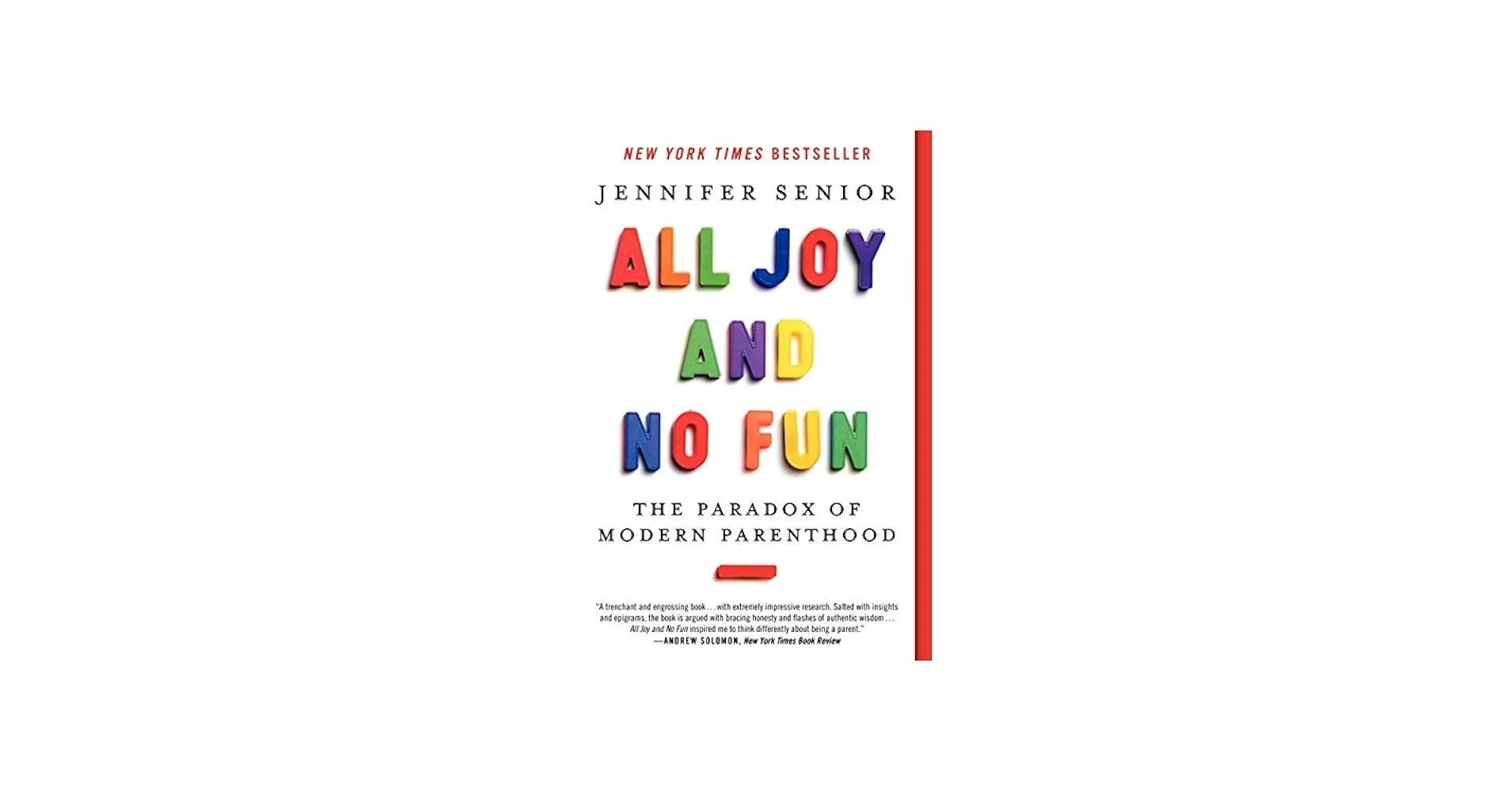
Senior’s 2014 book “All Joy and No Fun” spent 8 weeks on the New York Times Bestseller list.
Senior is a great psychological realist. She looks hard at how people actually live. Sometimes social science lights up her view. But she consistently looks beyond numbers into what no dataset can answer. For example, in her book, she asks why modern parenthood is both exhaustingly fraught and deeply fulfilling? And she bears down on the paradox whatever can show its pressures, sometimes data, often the vivid sense of people going about their days.
Maybe one key to her worldview is to get underneath the modus operandi (the manifest behaviors and articulated thoughts, into something that may be deeper.
QB: The best journalism—thinking of you and Kate Boo and Adrian Nicole LeBlanc and Isabel Wilkerson, and we could go on—really tolerates a tragic frame, that there’s a fate beyond our will. Whereas medicine is often pressed into a redemptive frame, a sense of taking fate by the hand of knowledge. Journalism says, “We’re here to know you.” Medicine says, “We’re here to help you.” But it’s really a narrow lane it gets into, because in all these messy, human situations come to medicine but if there isn’t a redemptive plot, it’s frustrating for everyone.
JS: Good journalists tolerate untidiness. And then, yes, look for meaning in spite of untidiness—or out of it. And it’s true that doctors want closure. But there is also this pitfall in writing, that for the sake of a story people try for at least a temporary moment of resolution and relief for the audience. To give them hope. It’s important to name that redemptive dash in our pieces, too. I’d say that in suffering, there are those moments. So, it's not false. But you have to resist sewing it up too tight. You know, you know, if a family is suffering, you can relish a moment of ease. Say a mom who is in conflict with her husband really sees his good heart. But you don't say They’ve made peace with their suffering or something like that. You acknowledge that after 20 years they figured out a modus vivendi, which is sort of the best you can do.
QB: The title of this conversation might be modus vivendi. We just looked it up: an arrangement or agreement, allowing conflicting parties to coexist peacefully, either indefinitely or until a final settlement is reached. A second definition is simpler: Just, a way of living.
JS: Well, that's what modus vivendi literally means.
III. “I Thought I'd be a Psychiatrist”
Senior is deft and selective in the way she drops into her material. Memoir tends to notice external events, characters and ideas for the way they help bring consciousness and the self to bear, but Senior does the inverse: She notices aspect of her consciousness and self insofar as it helps reveal her events, characters, and ideas.
QB: As a kid, how did you see your place in the world? What was your imagination of how you would do good and do well?
JS: I thought I'd be a psychiatrist. I was sent to a shrink when I was 10 because I was depressed. My uncle was a psychiatrist of some renown and my dad looked up to him and went through psychoanalysis. So did my mother early in there. I guess that was popular, even fashionable. So they sent me in 1979—but told me to keep it a secret. And I told absolutely no one.
QB: OK, wow.
JS: Only my parents knew. My parents told me it would be weaponized. I'm sure they were right.
Analysis didn't help me at all. But I liked it so much. I loved analyzing dreams. It felt so exciting that you could cough up all these symbols that might be meaningful, that would have specific resonances to you. Like if you dream about cheese, how it was specifically meaningful to something in your life. I don’t mean some universal Jungian cheese archetype. I mean how did the cheese relate to me? So I was very excited about that and so I wanted to be a psychiatrist and I started pre-med in college. Then college was so exciting there were so many cool things to take in that. At the time it was also starting to become okay to just be a PhD and those people were starting to gain respect and so I thought I’d get a PhD after school. Also I didn't really like people who were pre-med. I thought, I don't want to keep the company of people who are about to become doctors. So I decided not to, and I became a journalist sort of doing slightly the same thing. You know, it's psychoanalysis by another means.
QB: You found a way take the most intimate glimpses of some of the most impactful public lives.
JS: Yes, you know, even my political profiles were asking what people were working out in their personalities. I wrote about Alphonse D'Amato as this giant personality and what people were responsive to in him. I wrote about the culture of the Senate and the weird alliances that people had to make, almost like Survivor, in order to get future bills passed and the way that Hillary Clinton ingratiated herself and managed to make herself liked. I did stories like that. And that was because I was an Anthro major I looked at whole cultural systems.
IV. “Bags of Need”
Senior tells the truth sharply and quickly enough that it takes you by surprise. In other words, she is very funny. Her prose and manner are deeply artful, playful, which is one reason why people are able to take them so seriously, because the serious and difficult things are so layered in beauty and elan.
As a young reporter, you saw a lot of theater; later you were a daily book reviewer and I know you love long fiction. How did these arts shape the way you report and think?
JS: I think I’m drawn to big personalities. Sometimes it’s the public figures, or people less known, but I see these bags of need—these giant forceful personalities—and I want to know, “What makes them do that?”
Fiction does something similar. It’s why they want kids to read. The data might be mixed on whether reading generates empathy, but I have to believe—you can’t measure this by data—that inhabiting other people’s perspectives has to bust open your worldview a bit.
I love narratives with antiheroes. It blew my mind reading Lolita that you could be rooting for this monster. And The Sopranos—you’re in love with a sociopath who’s in psychoanalysis, trying to solve the riddle of himself, only for us to learn he’s immutable. It’s an attraction to darkness and understanding every conceivable perspective.
I think also dialogue and play, you know, plays are made up only of dialogue. That's what they are. You're not witnessing the stage direction. And, you know, I guess you are because it's happening up there, but you're not reading about the motives or whatever. Something gets played out. It's a little bit couples therapy you are seeing dynamics you know between people yeah and people actually embodying them and doing them so it's a way of witnessing behavior at close range.
V. “The Main Human Thing, Which is Meaning”
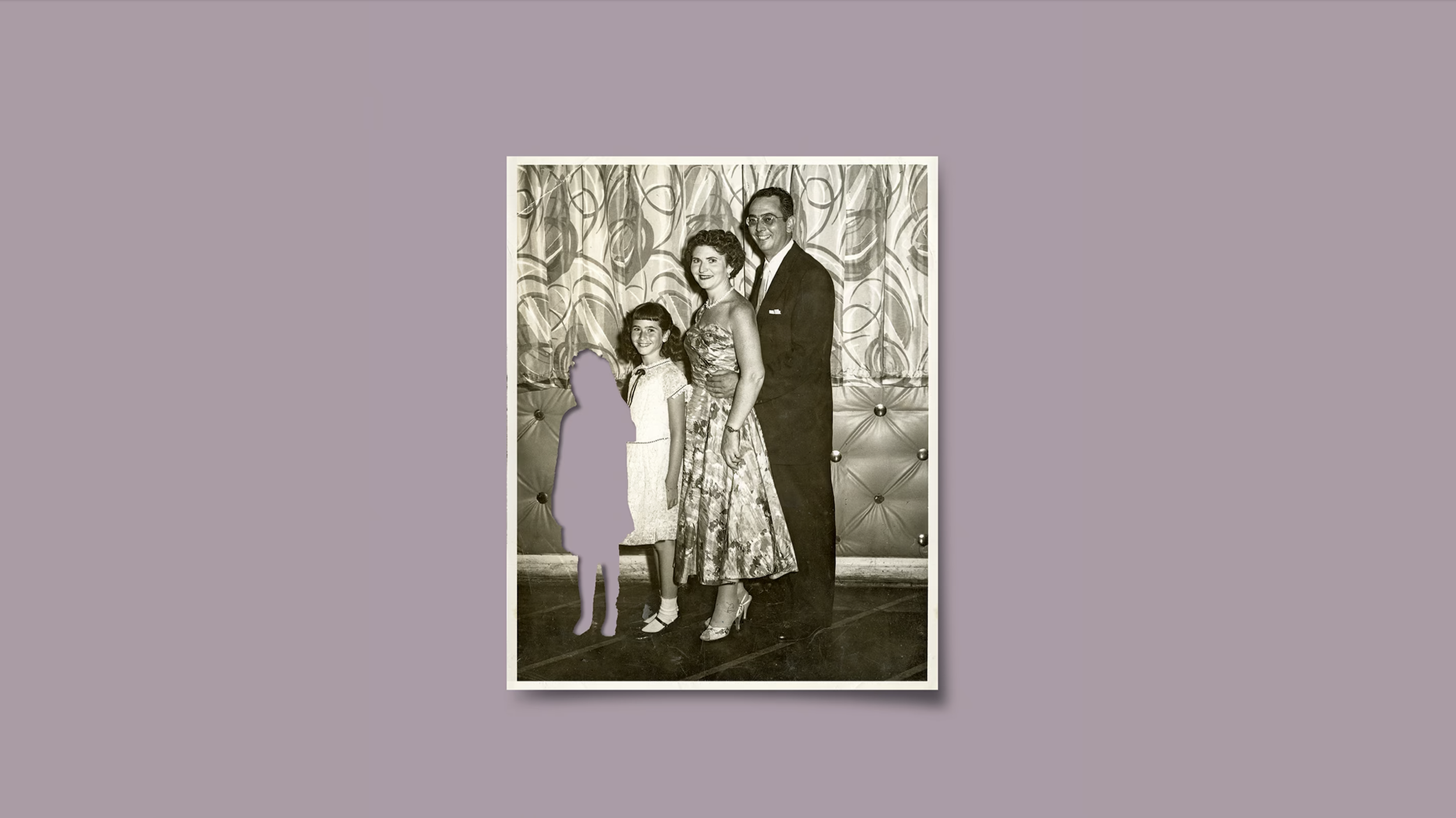
In Seniors 2023 essay for Atlantic, “The Ones We Sent Away,” she delves into the personal.
Senior rejects false binaries, which are most binaries. She doesn’t think art is better than medicine, only that the two should be felicitously entwined. She is a data hound, but she knows keenly where measurement finds its limits. Even her own intellectual project—which is often bravura—is sort through with humility. Like her prose, the conversation felt to us emotionally disarming.
QB:
You use social science, but you’ve also said it can miss the point. What does it fail to measure?
JS: A lot of it is bullshit. I mean it was the genesis of a book I wrote, this study that found parents on the whole would rather scrub toilets than deal with their kids. But this is the totally incomplete finding—that parenting makes you less happy—because it misses something so profound. I think the line I have in the introduction is that something slips straight through the sieve of social science. It misses the main human thing, which is meaning. And that also how we process our whole life and tell our life story. There’s a tension between the experiencing self unfolding every moment and how we retrospectively make sense of things, with our remembering self. Our experiencing self might think that parenting sucks. But our remembering self thinks it's awesome. And that's sort of what our identity is. Also, you know, transcendent moments are embedded in parenting in a way that they're not when you're just having dinner with friends. For me anyway—for most people. In hindsight I wish I hadn't relied quite so much on social science. I tried very hard to make sure that all the designs and the studies I used were you know pretty sound and had been replicated. I knew way before the replication crisis that a lot of these studies looked horseshit. I still wish I'd used less data. You know, it’s like what I said before that the data is unclear about whether or not kids benefit from reading. But that's really got to be bullshit because how can it not affect you if you're sitting inside someone else's perspective for a while? It's got on some level be good for you because it's not your own.
I'm really upset when I reread my book I just I just wince because I didn't really have the courage of my own convictions to just kind of say what I thought about things. I was so intellectually insecure that I felt I had to buttress everything social science. This was a big chunk of my career. I was hiding behind social science, because it was fashionable and it sold cover stories. I did have the knack, and I did manage to marry it to highly relatable situations and people.
But when I wrote about how we are in adulthood, what we were in high school, that wasn't anything that I read anywhere. It was an insight I had after attending my high school reunion. And I said, I wonder if people have written about this. And it was actually in a lot of kind of essayistic books, not social science-y books, but there was some social science that indirectly looked at this stuff, what kind of effect our adolescent selves have on our grown-up selves and how much carryover there is. And do our adolescent experiences in this asymmetrical way affect who we are? So I sort of did it backwards. I thought of the idea first and then rooted around. And I wrote about my own life, you know, and, you know, other people. But it took me a long time to let go of social science, completely.
QB: In your writing, you sometimes step in personally – but with restraint. How do you decide what part of you belongs on the page?
JS: Yeah. I used to have this trick of showing up in the bottom quarter of the piece for two sentences. Like I would just poke my head out from the wings and be, Hi, you know. It was unconscious but I felt the need to let people know that there was a human being who had personal drivers, you know, questions that they were thinking through that it wasn't just some kind of theoretical exercise. Later I felt more comfortable writing more of myself. There's the aunt piece that is entirely about my family. But not about its effect on me, you know. It’s still a story about warehousing.
In fact, at the top of the piece I write about how I came to the story. My husband directed me to a Twitter thread on people who can’t communicate. And it took me a half hour of scrolling to realize that Mark directed me to it because I had a warehoused relative who was neurodivergent and intellectually disabled. I had forgotten. I was just looking, Oh this is so moving and then it struck me, Oh my god one of these people is in my family. I totally forgot about her it it's weird how.
Also in the Brickman piece [“Happiness Won’t Save You,” on the tragic life of the psychologist Philip Brickman], I write that I had completely spaced out that someone in my family who had killed themselves. Yeah. Jumped from a building [as Brickman did].
QB: Maybe the piece where we learn the most about you is the friendship piece. [“It’s Your Friends Who Break Your Heart”]
JS: I was definitely thinking about there. [need to fill this in]
QB: You’re sort of famous for your metaphors. And we’re looking at them and, once our jaw comes up off the floor from awe, we noticing how often they feel kinetic—motion based—and also musical, like it seems like you can really hear just when it’s time. Is that instinct, craft, or coping?
JS: Okay, so it's a really good question. And also, I've never heard anybody in my life point out, and you're totally right, that a lot of my metaphors are based on motion. I'm now thinking of another one instantly when you said that I thought of how Bill Clinton creates this kind of gravitational pull, like you’re surprised that the silverware the drawers don't just sort of lift up and kind of start moving in his direction or something. Which is, again, super, it's kinetic, right? So it is weird. I do that. That is very strange. And I haven't a clue.
One thing I will tell you is that Mark has pointed out to me, that I'm the least visual person in the world, that I don't notice things that he's done around the house, significant shuffles. And I know that I once went to interview Barbara Epstein, [the legendary editor of The New York Review of Books]. Yeah. So I sat with her for an hour and a half, and she was pulling different stories out of her files for me. And I came back to the office, and a colleague who knew Barbara said, “So was it awkward? You'd never met her. Was it awkward?” And I said, “Because she's so intellectually formidable?” And he said, “No, you know, the whole one arm thing.”
I missed that she was missing an arm.
I also missed it that Rahm Emanuel was missing a finger. Even though I sat across from him and he was drumming his fingers on the desk. Like, so what part of me thinks, do I just have an interior visual sense, but not an exterior one? Like I have one also, it's just not focused outward.
But I’m very focused on what people are saying—aural stimuli. My mother is a musician. I never played an instrument. But I can detect accents instantly. And when I’m writing, I hear when it’s time for a metaphor. Rhythmically, you need one right there.
It’s like, knowing instinctively the value of a well-placed F-bomb; when to detonate, you know, when to drop. It tends to be sort of the same instinct what I just learned in Hollywood is called a treacle cutter. You know, I'm trying to write this screenplay. And you'll feel that the register is kind of too earnest or verging on, you know, something syrupy, and the pages are going to stick together. It's a fucking syrupy. So you try and cut it with something slightly more, you know, acidic or stringent that will kind of make sure that you can pull apart the pages. And I think that an F-bomb can do that when the writing is becoming too stuffy. And I think they is, has that sort of quality. I think metaphors often just, I know when I need them, there's been too much exposition or it's just time to move away from simple adjectives. What I was going to say about Barbara Epstein, I'm not sure that it's that my visual imagination was clouding out what was actually in the room. I think it's that I'm sort of aurally attuned. And so I was really listening to her and I'm psychoanalytically attuned. So I was thinking, Why is she saying that? And what is that? She's making an observation about Veronica Geng, who I was writing about. [“Humor Came Her”] What does that mean about Veronica Geng? Why is she telling me that? I'm sort of exploring the caverns of her head.
VI. Exeunt, with F-Bomb
QB: As always, it’s terrific talking to you. We love seeing the world the way you see it. And Jesus, Jennifer, this whole project started in your kitchen. We pitched you this idea and you told us you really saw it. That’s right when we made an internal commitment to Quite Broken, through that dialogue. Like Wilbur said of Charlotte, you’re a good friend and a great writer. And you’re a wise fucker.
JS: “A wise fucker”—see, you used a treacle cutter. And an F-bomb. See, you got a twofer out of that.
QB: Without an F-bomb, it would have been treacly. You would have been in an awkward position of being heaped with a kind of straight praise.
JS: Well, and it's not that it would have been awkward, but you heard that it would just make it more powerful and perhaps slightly thin out that moment in case it was too heavy. which it wasn't, but it was generous, and thank you.