

 Image 1 of 1
How is parenting like guiding a psychedelic trip?
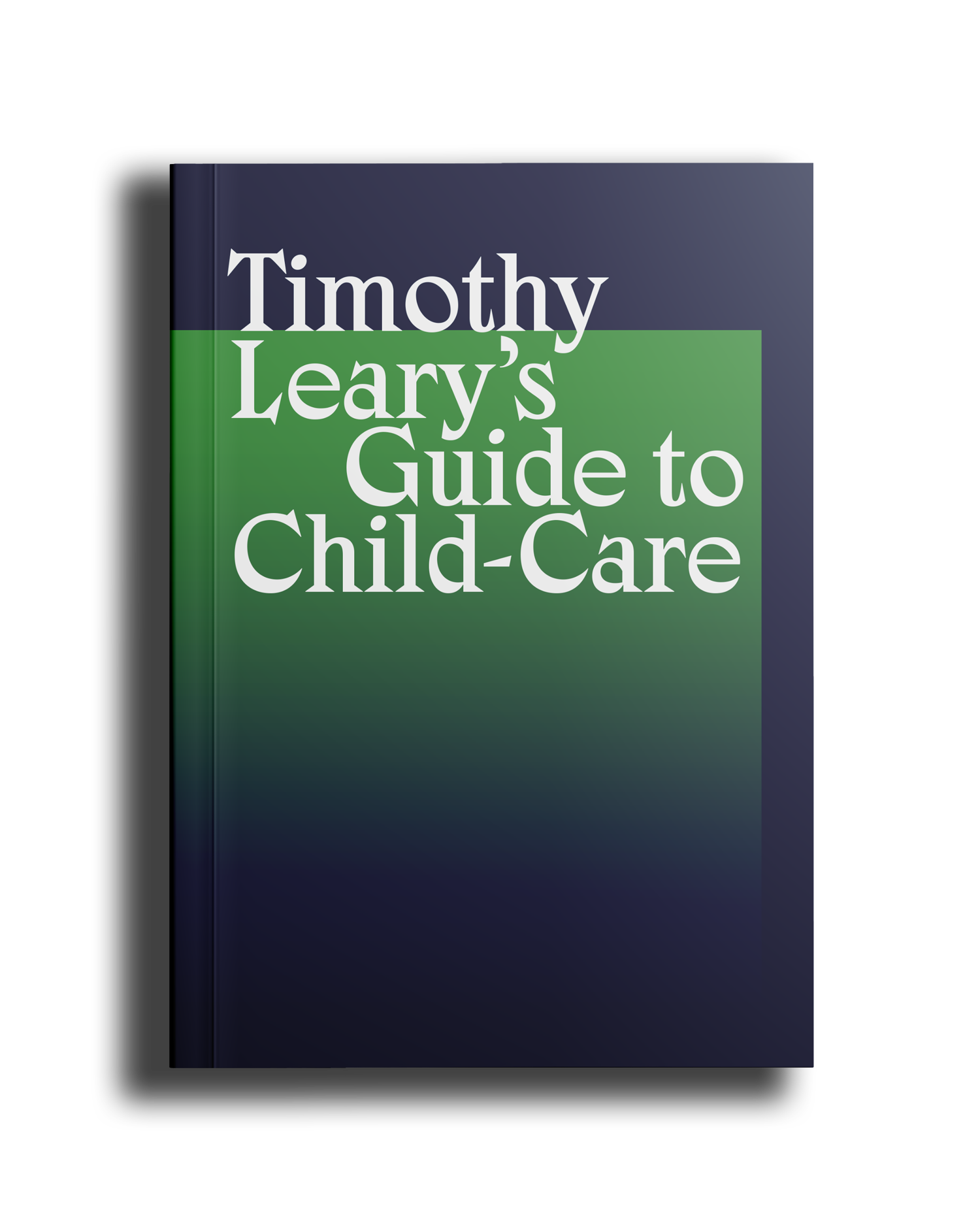
Drawing on intimate reportage, developmental psychology, and psychedelic neuroscience, Timothy Leary’s Guide to Child-Care starts with the insight that the brain states of small children (roughly until nine years old) are remarkably similar to those of adults on psychedelics.
Meanwhile, from the dawn of history, certain humans have practiced holding space—and skillfully guiding—journeys of non-ordinary states of consciousness, what we now often call “trip sitting.” In a psychedelic context, the sitter ensures safety (physical and emotional) so the tripper can move freely through meaningful, variable and indeed, at times, overwhelming inner states. The sitter generously offers boundaries and equanimity—and skillfully alternates between non-judgmental presence and the effective nudge.
Can parents adopt the same practices with their little trippers? This book explores seven relevant lessons that re-frame
Boundaries, not so much as limits, but as conditions for freedom
ministering to other not so much as self-sacrifice but as a place of relational joy
and labile imagination—even hallucination—not so much as pathology but as meaningful cognitive function
Along the way, the book asks how parents think about their own use of psychedelics. And humming underneath through it all is a meditation on the paradox of childhood. In one sense, it is evanescent. Yet its energies call to people of all ages.
Neither joke nor manifesto, this book is earnest play and playful argument. It attempts to find serious, humane language for the intensity of early childhood—and a model that treats children’s inner lives with the same respect we bring to the most profound adult experiences.
How is parenting like guiding a psychedelic trip?
Drawing on intimate reportage, developmental psychology, and psychedelic neuroscience, Timothy Leary’s Guide to Child-Care starts with the insight that the brain states of small children (roughly until nine years old) are remarkably similar to those of adults on psychedelics.
Meanwhile, from the dawn of history, certain humans have practiced holding space—and skillfully guiding—journeys of non-ordinary states of consciousness, what we now often call “trip sitting.” In a psychedelic context, the sitter ensures safety (physical and emotional) so the tripper can move freely through meaningful, variable and indeed, at times, overwhelming inner states. The sitter generously offers boundaries and equanimity—and skillfully alternates between non-judgmental presence and the effective nudge.
Can parents adopt the same practices with their little trippers? This book explores seven relevant lessons that re-frame
Boundaries, not so much as limits, but as conditions for freedom
ministering to other not so much as self-sacrifice but as a place of relational joy
and labile imagination—even hallucination—not so much as pathology but as meaningful cognitive function
Along the way, the book asks how parents think about their own use of psychedelics. And humming underneath through it all is a meditation on the paradox of childhood. In one sense, it is evanescent. Yet its energies call to people of all ages.
Neither joke nor manifesto, this book is earnest play and playful argument. It attempts to find serious, humane language for the intensity of early childhood—and a model that treats children’s inner lives with the same respect we bring to the most profound adult experiences.