

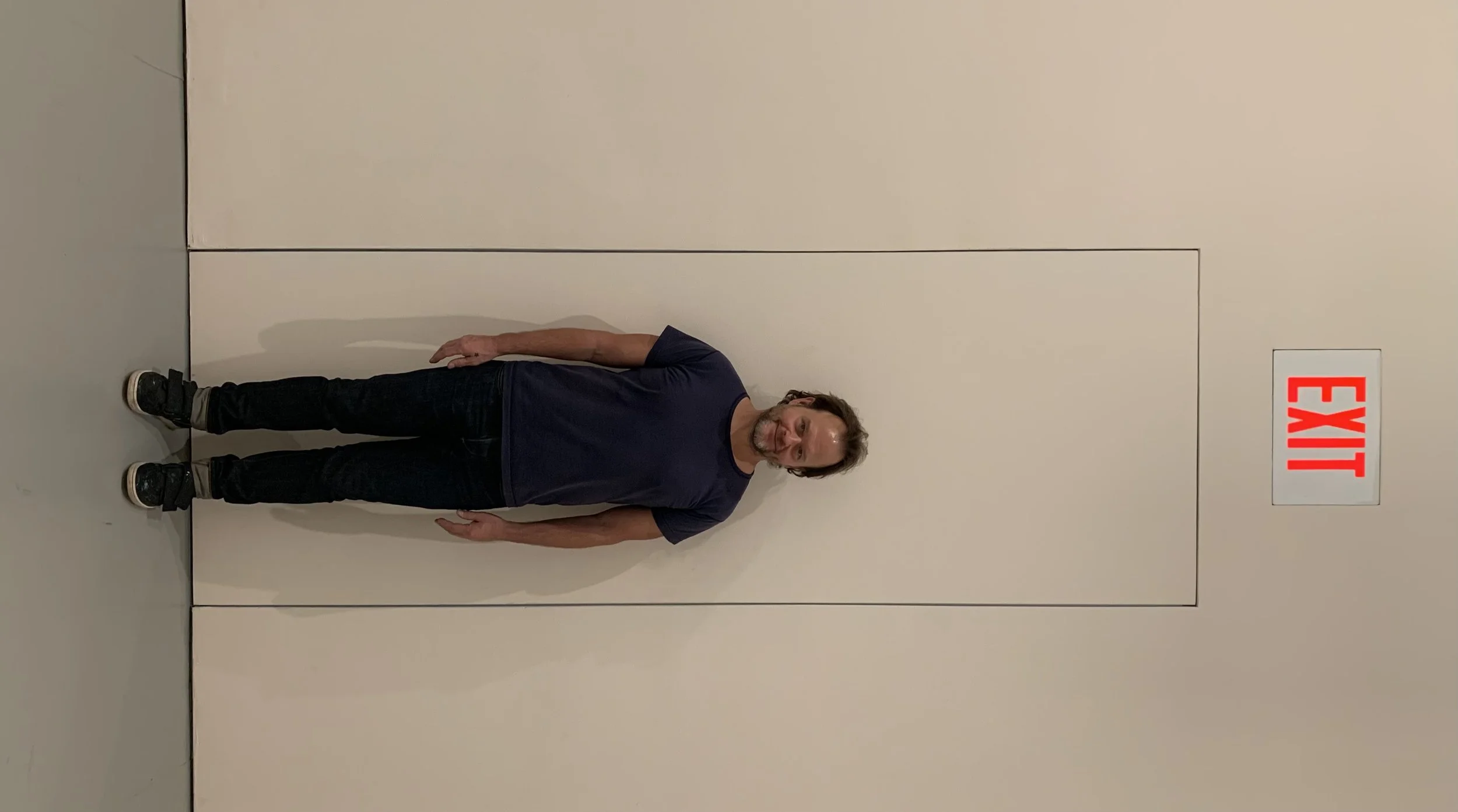
InterviewTodd Colby
Todd Colby’s work spans multiple genres and positions of mischief. He’s a punk—a sweetheart too. His words and images—on canvas, in chapbooks, on stickers he posts, usually giggling, on lampposts and the backs of STOP signs—swirl into the darkest darkness, yet somehow come back up with the kindest light.
What is it about work reassures by naming an ache?
November 3, 2026
I.
“Punk the Fuck Out”
Quite Broken: We hear you’re just back from New York City.
Todd Colby: I had a reading at Bowery Poetry Club. It was deeply moving. Two of my mentors were sitting in the front row: Ed Friedman, who ran the Poetry Project at St. Marks Church for years and Bob Holman, who ran the Nuyurican Poets Cafe. They were sitting in the front row right next to each other and smiling the entire time. They were the first people to invite me to read, to sit on the board of the Poetry Project, what I thought were these monumental tasks. To have them come up to me afterward, beaming, it felt really good. I was contained, but exuberant.
QB:
Contained But Exuberant: The Todd Colby Story. That could be the title of your bio-pic.
TC:
Exactly. And I just had therapy two hours ago, and I was talking about how it feels to feel good. Feeling good feels good. What feels especially good is feeling good without immediately thinking of the bad things, or even what I should feel bad about. It’s like … life is so short. Being in that room, knowing how many poets have died in the past several years, how quickly we’re all gonna go. Five years from now, half that group won’t even be there. The fleetingness of it all just let me embrace it.
QB:
It reminds us of something you often say, which is so Todd Colby in its mix of grim delight, or delightful grim—it’s just so reassuring on an existential level when you say, remind us of the phrase, it’s something like, “Don’t worry about it, it will all be over with soon anyway”
TC:
Yes, that’s it.
II. “Punk the Fuck Out”
Todd got his start writing lyrics and singing lead for a band called Drunken Boat, and he came to New York City in the 1980s, at a time when communities of artists were ravaged by AIDS. He talks about feeling the “decimation” of tha time, yet seeing artists (like David Wojnarowicz) whose spirits, while besieged, also roused to true and beautiful responses.